




- July 21, 2026
- Latest News
Choosing the wrong RFID tags is one of the most common, and expensive, mistakes businesses make when rolling out an RFID solution. A tag that works perfectly on a cardboard carton may fail completely when applied directly to metal or exposed to outdoor weather. Getting the tag selection right is just as important as choosing the reader, and it is a core part of how Autopack approaches RFID deployment for clients.
This guide walks through the main RFID tag types, how they differ, and the factors that should drive your selection when working with an RFID tag supplier.
Passive vs Active RFID Tags
Passive RFID Tag
A passive RFID tag has no internal power source. It is activated by the electromagnetic signal from an RFID reader, which also powers the tag long enough to transmit its data back. Passive tags are:
- Lower cost per unit
- Smaller and thinner, often in RFID label or RFID sticker format
- Best suited for high volume, item level tracking
Active RFID Tags
Active tags contain their own battery and continuously broadcast a signal. They offer longer read range and can include sensors for temperature, shock, or location, but cost significantly more per unit, making them suitable for high value asset tracking tags rather than mass inventory tagging.
Understanding UHF RFID Tags
A UHF RFID tag is the most widely used format for inventory and supply chain applications. UHF RFID tags offer:
- Read ranges from a few meters up to ten or more meters depending on reader and RFID antenna setup
- Fast bulk read capability, ideal for pallet or carton level scanning
- Compatibility with most modern warehouse and retail RFID readers
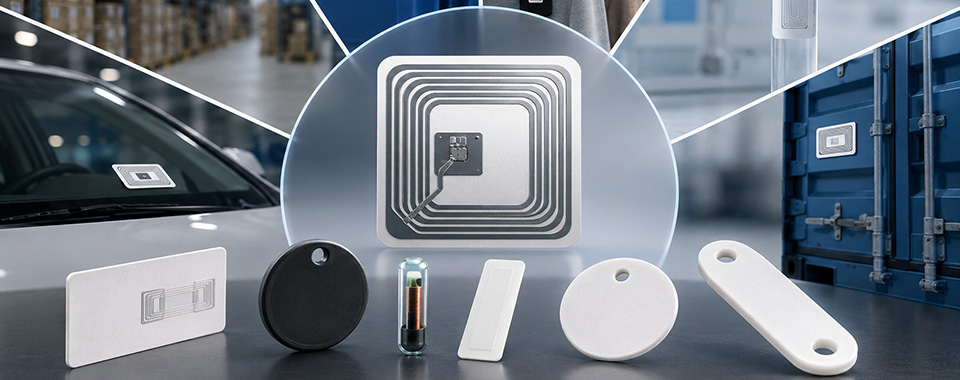
RFID Tag Formats to Consider
- RFID labels and stickers: adhesive backed, printable tags for cartons, cases, and retail items
- Hard tags: durable, reusable industrial RFID tags for asset tracking on tools, equipment, and containers
- On metal tags: specially designed tags that function correctly when mounted directly on metal surfaces, which normally interfere with RFID signals
- Smart RFID labels: combine a barcode, human readable text, and an embedded RFID chip in one label
Key Factors When Choosing RFID Tags
1. Application Surface
Standard tags often fail on metal or liquid filled containers due to signal interference. On metal or specialty industrial RFID tags solve this problem.
2. Environmental Exposure
Consider temperature range, moisture, chemical exposure, and UV exposure if tags will be used outdoors or in industrial environments. Durable industrial RFID tags are built to withstand harsh conditions where standard labels would degrade.
3. Read Range Requirements
Match tag and RFID antenna gain to your required range. A small warehouse aisle has very different requirements than a large yard or dock door.
4. Reusability
Hard asset tracking tags for tools or containers are designed for repeated use over years, while label format RFID supplies are typically single use, applied per shipment or item.
5. Memory and Data Needs
Basic tracking may only need a simple ID number, while more complex applications, such as batch tracking or compliance data, require tags with larger memory capacity, often set up through an RFID encoder.
Industry Applications
- Manufacturing: work in progress tracking using durable on metal or hard tags
- Logistics and warehousing: UHF label tags for cartons and pallets moving through dock doors
- Retail: smart RFID labels combining barcode and RFID for item level inventory accuracy
- Healthcare: asset tracking tags on equipment and mobile devices
- Construction: rugged industrial RFID tags for tools and machinery tracking across job sites
Working with an RFID Tag Supplier
A reliable RFID tag supplier should help you:
- Test tag performance on your actual product or packaging before full deployment
- Recommend the correct frequency and tag format for your RFID reader infrastructure
- Provide RFID encoder setup aligned with your data structure
- Support ongoing supply of RFID supplies and consumables at scale
Frequently Asked Questions
- What is the difference between passive and active RFID tags? A passive RFID tag has no battery and is powered by the reader signal, making it cheaper and smaller, while active tags have their own battery for longer range and added sensor capability, at higher cost.
- Can RFID tags be used on metal surfaces? Standard tags typically fail on metal, but specially designed on metal RFID tags include spacing or materials that prevent signal interference.
- How long do RFID tags last? Passive label tags are often single use, while durable hard tags used for asset tracking can last several years under normal conditions.
- What read range can I expect from a UHF RFID tag? Typical ranges run from one to three meters for basic setups up to ten or more meters with high gain RFID antennas, depending on the tag, reader, and environment.
- Do RFID tags work alongside barcodes? Yes. Smart RFID labels often combine a printed barcode with an embedded RFID chip, giving businesses flexibility to scan either format depending on the situation.
Need Help Selecting the Right RFID Tags?
Our team can test and recommend the right RFID tags for your specific products, packaging, and environment. Get in touch for a free consultation.
